2026-11-14 ·
Dryer in the Garage: How Florida Heat and Humidity Affect It
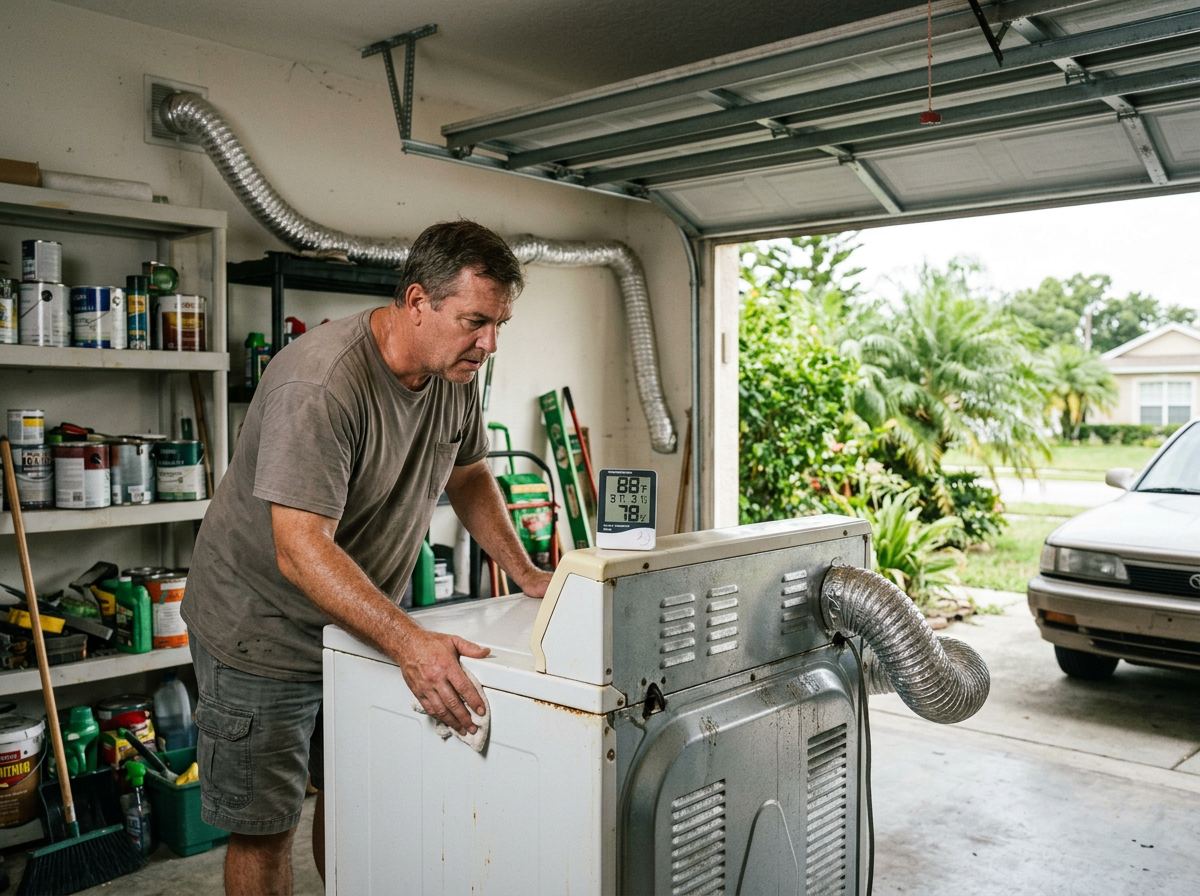
Clermont summers regularly push daytime highs into the low 90s with relative humidity often above 80 percent, which speeds lint buildup inside dryer vents and forces the motor to work harder when the unit sits in an unconditioned garage. These conditions shorten component life compared with indoor laundry rooms and raise the chance of overheating during long cycles.
Heat Effects on Motors and Belts
Prolonged exposure to garage temperatures that stay elevated after sunset adds stress to the drive motor and idler pulley. In Lake County, where overnight lows rarely drop below 75 degrees for weeks at a time, the motor runs warmer than normal and the rubber belt loses flexibility faster. Citrus Tower Appliance technicians see repeated cases of glazed belts and seized bearings on units that never had airflow across the exterior cabinet. Homeowners can reduce this load by keeping the garage door cracked a few inches on mild days and clearing any stored items that block side vents. Regular visual checks after unplugging the unit reveal dust on the motor housing that should be brushed away with a dry cloth. Our post on the signs of a clogged dryer vent covers a related problem. We cover a dryer that runs but does not heat in more detail on its own page.
Humidity and Lint Moisture Retention
High moisture in the air keeps lint slightly damp even after it leaves the drum, so it clings to vent walls instead of traveling fully outside. In Clermont garages, this creates thicker blockages near the wall penetration where the flexible duct meets the exterior vent hood. The extra weight on the blower wheel increases amp draw and can trip thermal fuses during peak afternoon heat. A simple homeowner step is to disconnect the duct at both ends after unplugging the dryer, then shake the sections outdoors to dislodge any clinging material before reattaching. Never attempt to clean inside the machine housing or the heating element area. Our page on Whirlpool dryers explains how we test for it.
Garage Ventilation Realities in Central Florida
Many Clermont homes position the dryer near the back wall of a two-car garage with limited cross-breeze once the door closes. Afternoon thunderstorms raise local humidity even higher, and the trapped air prevents the cabinet from cooling between loads. Installing a small louvered vent in the garage wall opposite the dryer helps, but only if it does not create a direct path for rain. Citrus Tower Appliance recommends checking that the exterior vent flap opens freely each month; a stuck flap lets humid air and occasional insects enter the duct during the wet season. These small steps keep airflow moving without requiring electrical or gas work. The same applies to laundry rooms in Montverde.
Safe Monthly Homeowner Checks
Unplug the dryer before any inspection. Look for cracks in the flexible duct, gaps around the wall connection, and lint on the floor beneath the unit. Wipe the exterior cabinet and the area behind the dryer with a dry microfiber cloth to remove surface dust that would otherwise be pulled into the intake. Note any unusual vibration or longer drying times and contact Citrus Tower Appliance for professional service rather than attempting internal repairs. These habits help residents in the Citrus Tower area keep garage dryers running through the hottest months without unexpected interruptions.