2026-11-14 ·
Signs Your Dryer Vent Is Clogged and Why It Matters
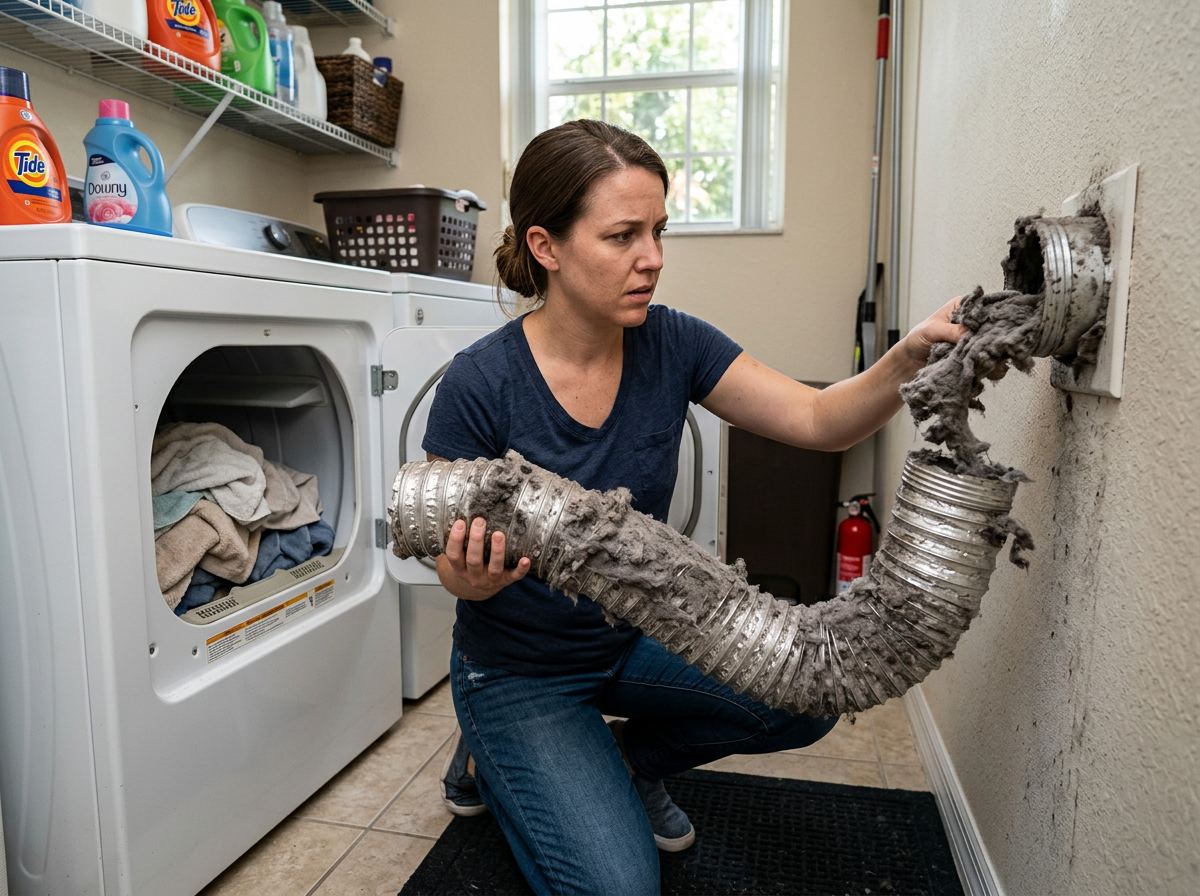
A clogged dryer vent typically reveals itself when clothes take noticeably longer to dry and the laundry room feels warmer than usual during operation. Homeowners in Clermont often notice these changes first because the area's high humidity slows natural moisture escape, forcing the dryer to work harder against restricted airflow. Over time this restriction can cause the appliance to overheat and push lint back into the home instead of venting it outside.
Common Signs of Restricted Airflow
One clear indicator appears when the exterior vent flap stays closed or moves sluggishly even while the dryer runs. In many Clermont neighborhoods built near the Citrus Tower area, homeowners also spot lint accumulating around the dryer door or on the floor after each load. Another frequent sign is a musty odor coming from the vent pipe, caused by trapped moisture that never fully exits the line. Residents sometimes feel the dryer cabinet becoming hot to the touch midway through a cycle, showing that heat cannot escape properly. Checking the outdoor vent opening for visible lint buildup or bird nests provides an immediate visual clue without opening any panels. Our post on slow drying in Florida humidity covers a related problem. We cover dryer vent problems in more detail on its own page.
Why Restricted Vents Affect Central Florida Homes
Central Florida's frequent afternoon storms and high year-round humidity mean dryer exhaust must travel cleanly outside or moisture lingers inside walls and ducts. When airflow is blocked, the extra heat and humidity can raise indoor moisture levels, encouraging mildew on nearby surfaces in Clermont laundry rooms. The dryer itself experiences added stress on its heating element and blower motor because it cannot expel air efficiently. Over repeated cycles this strain shortens the life of internal components, leading to earlier service needs. Proper venting also keeps laundry areas from becoming uncomfortably warm, an important comfort factor during the long summer months typical in Lake County. Our page on loads that take too long to dry explains how we test for it.
Safe Homeowner Inspection Steps
Begin every check by unplugging the dryer from its outlet to eliminate any electrical risk. Next, pull the appliance away from the wall only far enough to see the flexible or rigid duct connection at the back. Look for crushed sections, loose clamps, or visible lint inside the duct without attempting to disassemble sealed joints. Outside the home, stand at the vent termination and have someone run the dryer on air-only mode to confirm strong exhaust flow. If the flap does not open fully or airflow feels weak, note the observation and avoid further internal probing. The same applies to laundry rooms in Ocoee.
When Professional Service Becomes Necessary
Persistent longer drying times after clearing the exterior vent opening usually indicate buildup deeper in the line that requires specialized tools. Citrus Tower Appliance technicians in Clermont can inspect the full run from dryer to exterior termination using equipment designed for residential ductwork. They also verify that the vent pipe meets proper slope and termination standards suited to Central Florida building practices. Scheduling service at the first sign of restricted airflow prevents gradual damage to the dryer and keeps household air moving correctly through the home.